A Fleeting Moment In The Solar System Which Asteroids Have Moons


, the region around a planetary body where its gravity dominates, attracting rocks and artificial debris toward its orbit.

The Earth has a single moon, while Saturn has more than 60, with new moons being discovered all the time. But here’s a question, can a moon have a moon? Can that moon’s moon have its own moon? Can it be moons all the way down? Right now, NASA’s Lunar Reconnaissance Orbiter is happily orbiting around the Moon, photographing the place in high resolution. But humans sent it to the Moon, and just like all the artificial satellites sent there in the past, it’s doomed. No satellite we’ve sent to the Moon has ever orbited for longer than a few years before crashing down into the lunar surface. In theory, you could probably get a satellite to last a few hundred years around the Moon. But why? How come we can’t make moons for our moon to have a moon of it’s own for all time? It all comes down to gravity and tidal forces. Every object in the Universe is surrounded by an invisible sphere of gravity. Anything within this volume, which astronomers call the “Hill Sphere”, will tend to orbit the object. So, if you had the Moon out in the middle of space, without any interactions, it could easily have multiple moons orbiting around it. But you get problems when you have these overlapping spheres of influence. The strength of gravity from the Earth tangles with the force of gravity from the Moon. Although a spacecraft can orbit the Moon for a while, it’s just not stable. The tidal forces will cause the spacecraft’s orbit to decay until it crashes. But further out in the Solar System, there are tiny asteroids with even tinier moons. This is possible because they’re so far away from the Sun. Bring these asteroids closer to the Sun, and someone’s losing a moon. The object with the largest Hill Sphere in the Solar System is Neptune. Because it’s so far away from the Sun, and it’s so massive, it can truly influence its environment. You could imagine a massive moon distantly orbiting Neptune, and around that moon, there could be a moon of its own. But this doesn’t appear to be the case. NASA is considering a mission to capture an asteroid and put it into orbit around the Moon. This would be safer than having it orbit the Earth, but still keep it close enough to extract resources. But without any kind of orbital boost, those tidal forces will eventually crash it onto the Moon. So no, in our Solar System, we don’t know of any moons with moons of their own. In fact, we don’t even have a name for them. What would you suggest? Podcast (audio):
First, consider that we have a completely subjective idea of what a moon is. The Moon orbits the Earth, and the Earth orbits the Sun, and the Sun orbits the center of the Milky Way, which orbits within the Local Group, which is a part of the Virgo Supercluster. The motions of objects in the cosmos act like a set of Russian nesting dolls, with things orbiting things, which orbit other things. So maybe a better question is: could any of the moons in the Solar System have moons of their own? Well actually, one does. 


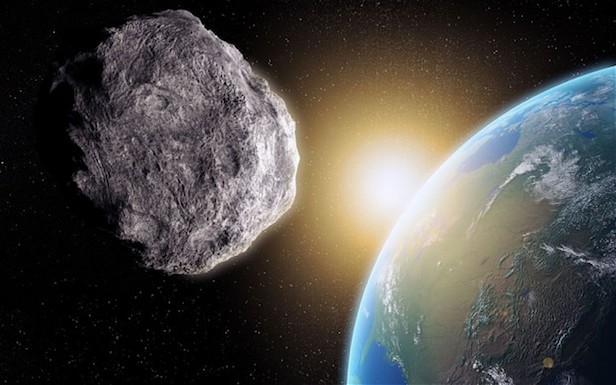
About 20 percent of asteroids have moons, and some have more than one. Five asteroids in the belt have two moons, including the asteroids named 93 Minerva, 87 Sylvia and 45 Eugenia. Researchers can use information about an asteroid's moon to find out more about the asteroid itself, because they often have the same origins. One exception to this is 93 Minerva, because it is much more dense than other multi-moon asteroids.
More facts about asteroids:
More Info: www.sciencedaily.com
|
anon994153
Post 1 |
Asteroids might have moons but I don't believe they do. |


Join Our Newsletter